Case study · Strategy · Non-profit organisation
A foundation in a phase of rapid growth: a professionalisation strategy for 2023–2025
A large foundation understood its beneficiaries and donors very well, but internally it lacked structure, planning and communication. In 6 weeks we carried out a diagnosis and 3 days of workshops with the management, and prepared a strategy map with 22 goals – along with a plan to rebuild the organisational structure.
Situation and goal
A strong mission, weak back office
The client is a nationwide foundation working in health and education: diagnosis, therapy, training for specialists and families, and social campaigns. The organisation was growing, had a recognisable brand, knew its donors well and responded quickly to social needs.
But growth exposed gaps in the back office. Employees didn’t know what others were doing or where the organisation was heading, and felt under-informed. There was no clear structure, roles or responsibilities, no shared CRM system and no cascading of goals down the organisation. On top of that came high staff turnover and difficulty recruiting specialists.
The board commissioned a strategy for 2023–2025: further development of the foundation’s statutory activities and network of centres, while putting the organisation in order from the inside.
What we did
Four stages – from an organisational audit to a plan for a new structure
Organisational audit
- Survey of growth barriers and organisational efficiency among employees and management
- Growth barriers at 27.9 points vs. 23.1 on average in Polish companies (the higher, the worse)
- Efficiency at 3.33 out of 5 vs. 3.57 on average in Poland – organisational culture was the weakest: motivation, communication and trust
Environment and operating model
- Analysis of opportunities and constraints compared with other organisations in the sector
- Review of the operating model and value chain
- Strengths: recognisability, knowledge of donors, quick response to social needs
Strategy workshops
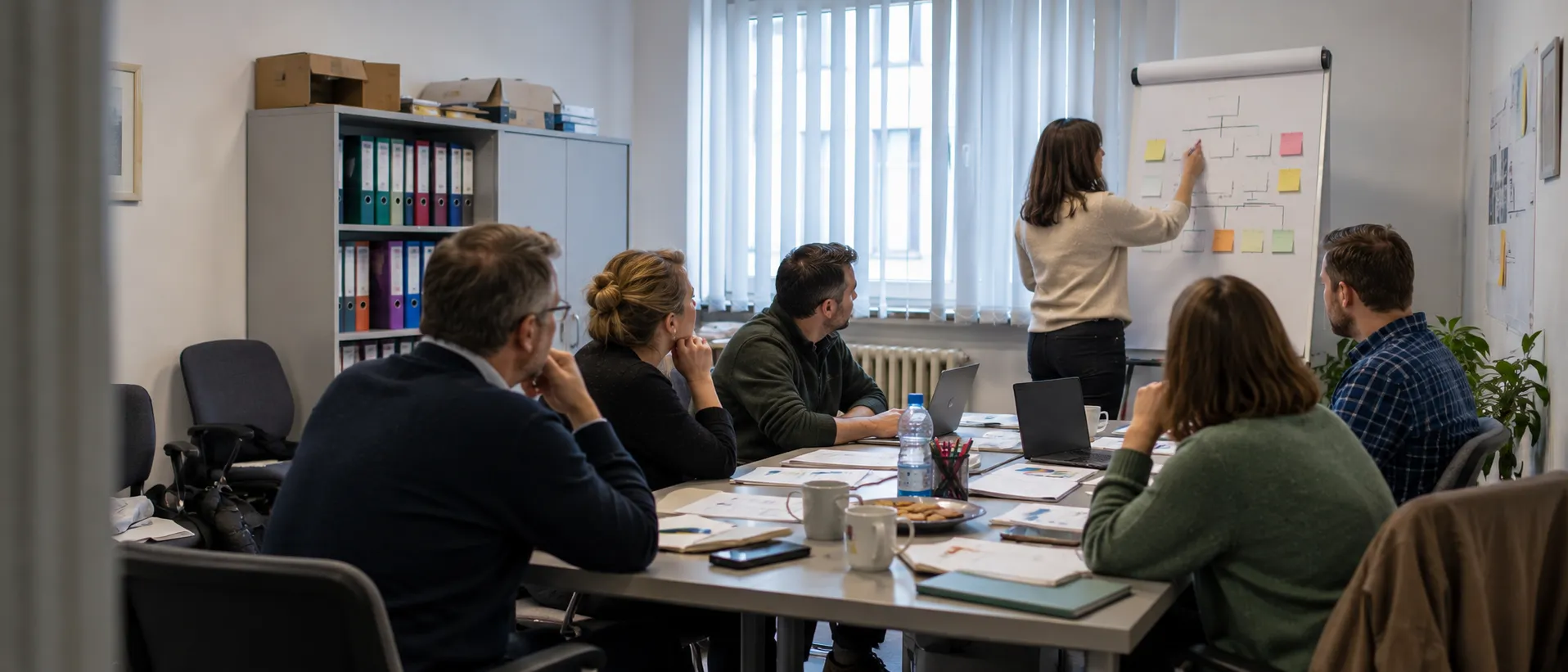
- 3 days of workshops (2 + 1) with the board and management
- Foundation: the operating concept, a strategic mission with measurable goals for 2025, a core strategy
- 22 goals in 6 areas: market, services, resources, operating systems, management systems, culture
Implementation plan
- A/B/C priority, an owner and a start date for each goal
- A detailed sequence of actions for the goal “optimising the structure of the whole organisation”
- Analysis of positions, roles, skills and competencies → new communication paths → a design for the new structure
Results
What the board received at the end of the project
- A strategy map for 2023–2025 with measurable goals for statutory activities, revenue and the network of centres.
- Five pillars of “structured growth”: a role-based structure, better internal and external communication, process standardisation, technological development and a change in management systems.
- 22 strategic goals – 8 of them top priority, including a strategy for developing the nationwide network, process management, a strategic planning system and a new organisational structure.
- Owners and planned start dates for each goal – from November 2022 to July 2023.
- A ready sequence of actions for rebuilding the structure: from describing roles and competencies to hierarchy, units and span of control.
Takeaways for your organisation
What worked in this project
Non-profits grow like companies – and face the same barriers. Growth without structure and planning produces the same symptoms: information chaos, “firefighting” and staff turnover.
Culture is the foundation, but it isn’t enough. Strong values and trust in the mission held the team together, but further growth requires roles, processes and communication.
Structure first, then scaling. Rebuilding the structure and planning went to the top of the list – ahead of opening new centres.
Who led the project
Strategy Partners expert

Damian Rusiecki
Founder and Managing Partner of Strategy Partners. One of the three advisers leading the project – the diagnosis, strategy workshops and implementation plan.
View profile →